Dream Big Moon and Clouds Aesthetic PNG: Your Celestial Design Muse
Unpacking the Visual Magic of This PNG
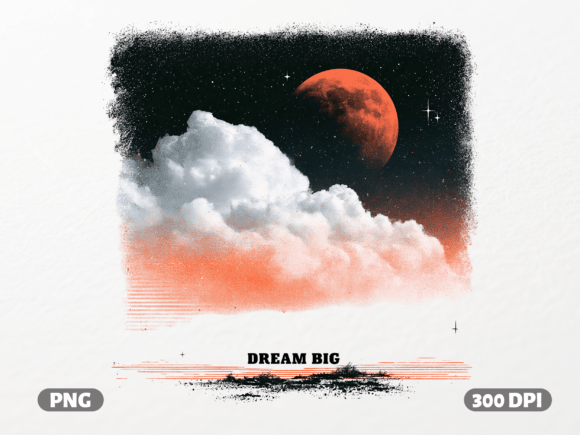
When you first see the Dream Big Moon and Clouds Aesthetic PNG, it’s less about a static image and more about a feeling. The central element—that rich, crimson moon—doesn't just sit in the sky; it pulls you in. It’s a deep, warm red, not a harsh alarm, which gives it an almost tangible, atmospheric quality. Surrounding it are the clouds. They aren’t just standard white puffs. They have a soft, dream-like texture, layered in a way that suggests depth and movement, as if you’ve caught a moment of celestial drift. There’s a subtle ground landscape at the base, grounding the scene just enough to give it context without distracting from the main event. The overall effect is a blend of cosmic aesthetics and quiet inspiration. It’s a premium design asset that carries a specific personality: contemplative, ambitious, and slightly magical. The transparent background is key—it means this scene isn’t confined to a box. It’s ready to float, layer, and integrate into your work.
Where This Graphic Truly Shines: Real-World Applications
The strength of the Dream Big Moon and Clouds Aesthetic PNG lies in its versatility. It’s not a one-trick pony. For apparel designers and small business owners creating custom merchandise, this is a standout graphic. Imagine it centered on the back of a black hoodie or a soft, heather grey t-shirt. The crimson pops, the clouds soften the edges, and the “Dream Big” message resonates. It’s a ready-made brand identity element for a line focused on motivation, night owls, or celestial themes.
For digital creators and social media managers, it’s a goldmine. Use it as a hero image for a blog post about goal setting. Break it apart—the moon alone could become a recurring icon in your social media graphics, or the cloud textures could serve as overlays for Instagram stories, adding a cohesive, ethereal vibe to your feed. In web design, it could anchor the header of a landing page for a wellness app or a creative portfolio, setting an immediate tone of aspiration and calm.
Don’t overlook print and editorial design. This PNG would be striking as the cover art for a journal, a poster for a home office, or a featured image in a magazine layout about mindfulness or astronomy. Its high resolution (300 DPI) ensures it holds up beautifully in print, whether it’s sublimation printing on a mug or direct-to-garment on fabric. For packaging design, especially for products like candles, teas, or books, it adds an instant layer of sophistication and story.
Making It Work: Practical Design Considerations
Integrating a graphic like this effectively requires a bit of strategy. First, consider your visual hierarchy. This PNG is a strong visual element. If you’re pairing it with text, you need a font pairing that complements, not competes. A clean, modern sans-serif font like Montserrat or Lato works well for body copy, providing readability against the detailed graphic. For headlines, you could use a elegant serif font like Playfair Display to add a touch of classic contrast, or a simple script font for a more personal, handwritten feel. The key is balance; let the moon and clouds be the focal point.
Color is your next lever. The PNG’s palette is dominated by deep blues, blacks, and that crimson accent. Pull from these. Use the deep blue for text or background elements to create a seamless, cohesive brand identity. Use the crimson sparingly for call-to-action buttons or key highlights to guide the viewer’s eye. This creates a professional, intentional look rather than a random collage.
Always test the PNG in context. Does the transparent edge blend well with your background color or texture? Does the scale work? Sometimes, using just a portion of the design—like cropping to feature only the moon and a wisp of cloud—can create a more powerful, focused composition for a logo or icon. Remember, as a high-quality PNG, it’s built for flexibility. Use that to your advantage in your creative projects, from logo design explorations to full-scale editorial design layouts. It’s a tool to evoke a feeling; your job is to frame that feeling within the context of your specific project’s goals.